



ScienceStruck

Physics, page 3

Energy, motion, light and the laws underneath them, explained with everyday examples instead of equation walls.

Physics

A Comprehensive List of All the Physics Formulas

23 min read

Learning physics is all about applying concepts to solve problems. This article provides a comprehensive physics formulas list, that will act as a ready reference, when you are solving physics problems. You can even use this list, for a quick revision before an exam.

A Color Spectrum Chart With Frequencies and Wavelengths

3 min read

Colors are the most significant part of our everyday lives. Without colors, our life would be dull and boring. Have you ever wanted to know the underlying facts about colors. Well, let me be of assistance to you on this colorful journey and explain the color spectrum chart to clear your doubts.

Nuclear Power Plant Disasters

7 min read

Nuclear is the way of the world today. Nuclear families spend evenings debating nuclear energy. The biggest con of this energy is safety. Many disasters over the years have kept us debating if it is really worth it. There are no power plant accidents, there are only nuclear power plant disasters, because their magnitude and impact is much beyond human imagination.

Here’s a Simple Explanation of How Electromagnets Work

8 min read

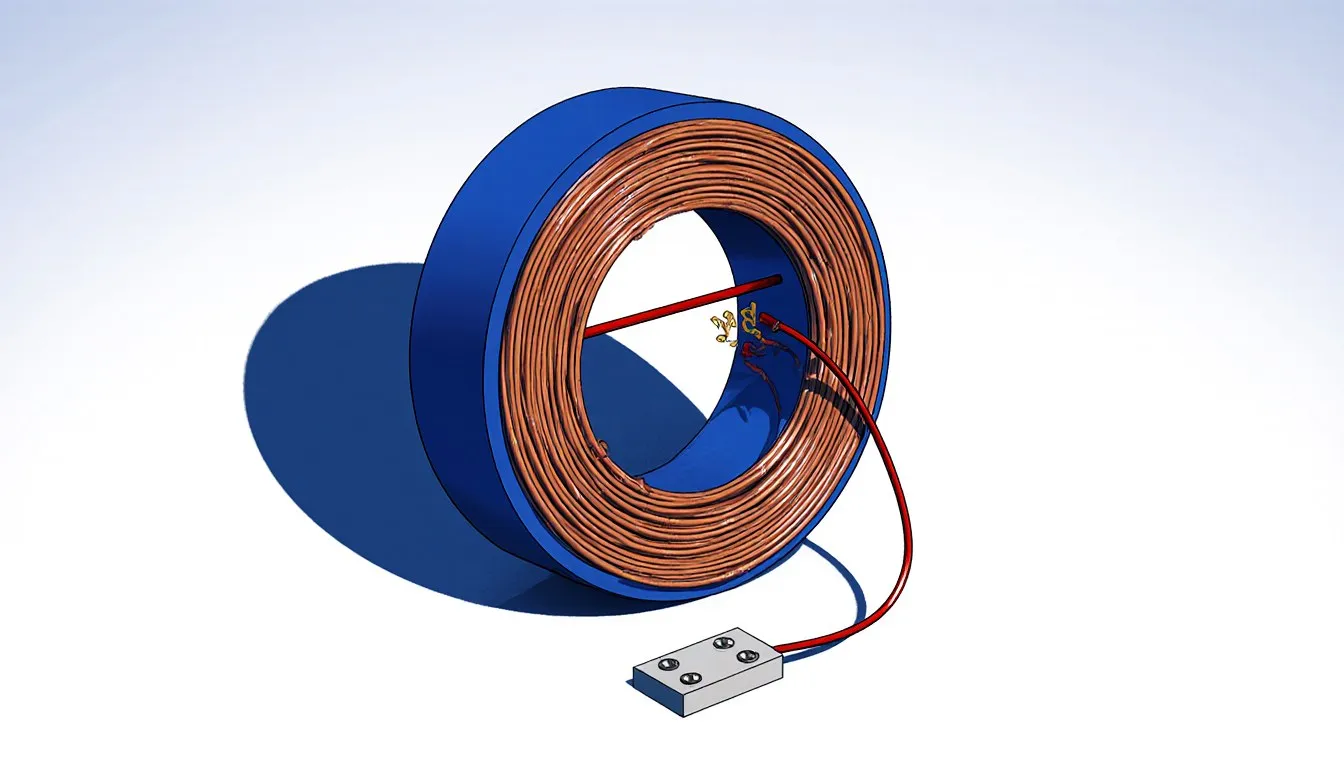
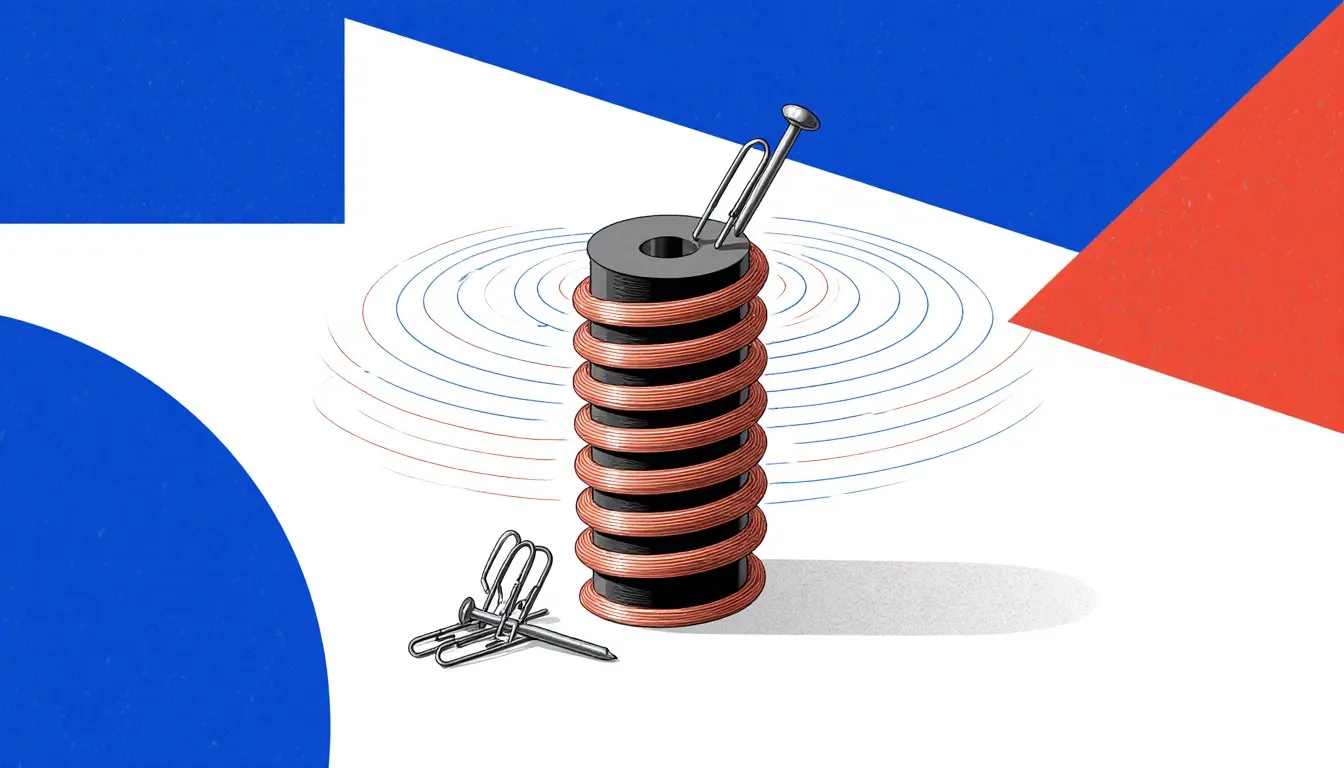
One of the basic components of electronic devices and machines, electromagnets are used in various applications and fields like scientific research, home appliances, industrial manufacturing of products, gadgets and gizmos, chemical factories, etc. This ScienceStruck post provides you with a brief idea about electromagnets, especially regarding their working mechanism.

Methods of Generating Electricity

7 min read

Without electricity, our lives would have come to a halt. Its use has become so inevitable, that seldom do people think about how it is generated. To know more about various methods that are used to generate electrical energy, read this article.

What are Neodymium Magnets?

3 min read

Neodymium magnets are permanent magnets consisting of rare-earth elements. They have useful applications in many fields, but can cause fatal injury if not handled properly.

The Uses of Magnets

3 min read

Magnets, besides being fun to play with, have many uses. They are used in consumer as well as industrial goods. Let’s get to know more about the uses of magnets.

Boon or Bane? Advantages and Disadvantages of Nuclear Energy

5 min read

The use of nuclear power is debatable, with some proposing it for the amount of energy produced, while some dead against it because of its potential threat to environment and human life. The advantages and disadvantages of nuclear energy provided by ScienceStruck will help you form an opinion about the same.

Simple Machine: What You Need to Know Regarding Levers

5 min read

A lever is a type of simple machine that is used to lift weights. Several modern machines are based on the application of this device. Read this ScienceStruck post to gain more information about levers and their various examples.

Simple Machines: Pulley Systems and Their Working Mechanism

6 min read

Pulleys are categorized as a type of simple machine consisting of a grooved wheel and a rope or cable. These devices help us to lift heavy loads in an effective manner, as well suspend various objects in the air (for example: a flag). Read this ScienceStruck article to know more about the various types of pulley systems and their working mechanisms.

5 Inventions of Archimedes That Still Don’t Fail to Surprise Us

7 min read

Archimedes was a prodigy in the field of mathematics and science, where he pushed the boundaries of both subjects to obtain a profound result through careful research, calculation, and observation. He is known as the ‘father of mathematical physics’, and the ‘father of integral calculus’, quite rightly. Let’s take a look at how the inventions of Archimedes have paved a way for modernized versions of his works.

Boyle’s Law Explained

3 min read

Boyle’s Law provides an important formula to calculate the effect of changing pressure on the volume of a gas, and vice versa. It was put forward by a physicist Robert Boyle in the 17th century, and has proved very beneficial for scientists involved in the study of properties of gases.

An In-depth Look at What is Gravity and How Does it Work

13 min read

One of the most important scientific breakthroughs of all times is Sir Isaac Newton’s universal law of gravitation, all thanks to the falling apple. Gravity is an invisible force that pulls/attracts all matter towards itself. The fundamental forces of the universe include the electromagnetic, strong nuclear, weak nuclear, and gravitational forces.

An Easy Explanation of the Basics of Quantum Mechanics for Dummies

9 min read

Next time when a physics professor says that the probability of your position at any given time, in the whole universe, is never zero, don’t think he has lost his marbles. This is where we can start with an explanation of the basics of quantum mechanics for dummies.

How Does Radioactive Decay Work?

5 min read

One of the most interesting scientific phenomena, radioactivity has always attracted people for undertaking research on it and also for unraveling the scientific truths regarding its aspects. This ScienceStruck article explains in detail how radioactive decay works.

A Brief History of Who Discovered Magnets and Other Rare Facts

2 min read

We all know that magnets attract iron particles. We have seen fridge magnets, other decorative articles, and even some toys that use magnets. We have heard of the applications of magnetism in daily life. But have we thought of who must have discovered magnets and when?

Causes of Optical Illusions

4 min read
Optical illusions are caused by the interestingly complex structure of our eyes and the brain. To know about the causes of optical illusions, read on...

In the Mind’s Eye: How do Optical Illusions Work?

6 min read

What are optical illusions? With the help of colors, specific patterns, and light, images are created in a way such that the brain perceives them as different from what they really are. Read this ScienceStruck article to find how optical illusions work.

We Bet You Didn’t Know These Fun and Interesting Facts About Magnets

3 min read

Magnetism isn’t just that fancy little pulling force which attracts iron objects, it’s probably the biggest force keeping us alive. Technically speaking, a magnet is any object that creates a magnetic field. This magnetic field essentially pulls ferromagnetic objects like iron, nickel, and cobalt towards it. Although invisible, the magnetic field is the most defining feature of magnets.

Accomplishments of Albert Einstein That Will Leave You in Awe

6 min read

Albert Einstein is well-known for his brilliant contributions in the field of physics and in particular, famous for his theory of relativity. The accomplishments of Albert Einstein are many and varied. They range from discoveries of the mysteries of the universe to being a promoter of peace and freedom of expression during a time when fear of communism was rampant.

Electron Emission from Solids (I): History & Theory

7 min read

Certain solids emit electrons from their surfaces when subjected to heat (thermionic emission), electromagnetic radiation (photoemission) and/or an electric field (field emission). Much of electronics, including vacuum tubes, cathode-ray tubes in their various manifestations, and electron microscopes, depend on the emission of electrons from metals and the manipulation of these electrons to perform various tasks. Here’s more on the history and theory of electron emission from solids.

Biography of Albert Einstein

15 min read

Here is a brief, selective, life sketch of Albert Einstein, the most celebrated scientist ever. He has contributed immensely to the mankind with his work. Discover his life in this article.

Take Your Pick - Vacuum or Nothing!

4 min read

The history of vacuum and its applications. What is vacuum? Can you achieve perfect vacuum? Why isn’t the Earth’s atmosphere being sucked out into outer space? What applications & industries use the principle of vacuum? And more...